


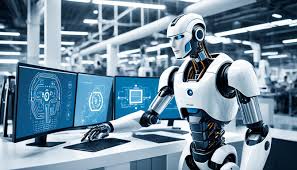
Artificial Intelligence is rapidly reshaping modern industries by improving efficiency, automation, decision making, and innovation across multiple sectors. Businesses are using AI to analyze data, reduce costs, and enhance productivity in ways that were not possible before. From healthcare to finance, manufacturing to education, AI is becoming a powerful driver of global industrial transformation.
Healthcare Industry Transformation
Faster Disease Detection Systems
Artificial intelligence helps healthcare professionals detect diseases earlier by analyzing medical images, scans, and patient records with high accuracy. These systems improve diagnosis speed and reduce human error, allowing doctors to provide better treatment plans. Early detection also increases survival rates and improves overall healthcare outcomes for patients globally.
Personalized Treatment Planning
AI enables personalized treatment by studying patient history, genetics, and lifestyle data to recommend suitable medical solutions. This improves recovery rates and reduces trial-and-error treatments. Doctors can make more informed decisions, ensuring better care quality. Personalized healthcare also enhances patient satisfaction and long-term health management efficiency.
AI Assisted Medical Robots
Medical robots powered by artificial intelligence assist surgeons in complex operations with precision and control. These systems reduce risks during surgery and improve accuracy in delicate procedures. Robotic assistance also helps shorten recovery time for patients while increasing the success rate of medical operations in modern hospitals.
Smart Hospital Management Systems
AI improves hospital operations by managing appointments, patient records, and staff scheduling efficiently. These systems reduce waiting times and administrative workload. Hospitals become more organized, allowing healthcare workers to focus more on patient care. Smart systems also enhance communication and resource management across medical departments.
Drug Discovery Acceleration
Artificial intelligence speeds up drug discovery by analyzing large datasets to identify potential chemical compounds. This reduces research time and development costs significantly. Pharmaceutical companies can introduce new medicines faster, improving global healthcare access and treatment options for various diseases affecting millions worldwide.
Financial Industry Revolution
Fraud Detection Systems
AI helps banks detect fraudulent transactions by analyzing unusual patterns in real-time. These systems improve financial security and protect customers from cyber threats. Automated monitoring ensures quick responses to suspicious activity, reducing financial losses and increasing trust in digital banking systems across global markets.
Smart Investment Analysis
Artificial intelligence assists investors by analyzing market trends, risks, and opportunities. These systems provide data-driven insights for better investment decisions. AI-powered tools help reduce financial risks and increase profit potential, making trading and investment strategies more efficient and reliable in modern financial markets.
Automated Customer Support
Banks use AI chatbots to provide instant customer support and resolve queries quickly. These systems work 24/7, improving service availability and customer satisfaction. Automation reduces workload on human staff and ensures faster communication, making financial services more efficient and user-friendly.
Risk Assessment Models
AI evaluates credit history, income, and financial behavior to assess loan risks accurately. This helps banks make better lending decisions and reduce default rates. Automated risk analysis improves financial stability and ensures safer banking operations for both institutions and customers.
Digital Banking Innovation
Artificial intelligence enhances mobile banking apps by offering personalized services, faster transactions, and better security. Customers enjoy seamless digital experiences with improved convenience. AI-driven banking is transforming traditional financial systems into smarter, faster, and more efficient platforms.
Manufacturing Industry Automation
Smart Factory Systems
AI-powered smart factories use connected machines and systems to automate production processes. These systems improve efficiency, reduce errors, and increase productivity. Real-time monitoring allows manufacturers to optimize performance and maintain high-quality standards in industrial production environments.
Predictive Maintenance Technology
Artificial intelligence predicts machine failures before they occur by analyzing equipment data. This reduces downtime and maintenance costs. Factories can operate more smoothly and avoid unexpected breakdowns, improving overall production efficiency and operational reliability.
Quality Control Automation
AI systems inspect products during manufacturing to detect defects instantly. This improves product quality and reduces waste. Automated quality control ensures consistent standards and increases customer satisfaction by delivering reliable and high-quality products.
Supply Chain Optimization
AI helps manufacturers manage inventory, logistics, and supply chains efficiently. It predicts demand and reduces delays in production and delivery. This improves cost efficiency and ensures timely availability of products in global markets.
Industrial Robotics Integration
Robots powered by artificial intelligence perform repetitive and complex tasks with high precision. This increases production speed and reduces human workload. Robotics integration enhances safety and efficiency in modern manufacturing industries.
Retail and E-Commerce Growth
Personalized Shopping Experience
AI analyzes customer behavior to recommend personalized products in online shopping platforms. This increases sales and improves customer satisfaction. Personalized recommendations make shopping more engaging and efficient for users.
Smart Inventory Management
Retailers use AI to track stock levels and predict product demand. This prevents shortages and overstocking. Efficient inventory systems improve business profitability and operational efficiency.
AI Chat Support Systems
E-commerce platforms use AI chatbots to assist customers instantly. These systems answer questions, guide purchases, and improve user experience. Automated support ensures fast and reliable communication.
Marketing Optimization Tools
AI analyzes customer data to create targeted marketing campaigns. This increases engagement and conversion rates. Businesses can reach the right audience with better accuracy and lower marketing costs.
Automated Checkout Systems
AI enables faster checkout processes in retail stores using digital payment and scanning systems. This reduces waiting time and improves customer convenience in physical and online stores.
Transportation and Mobility Changes
Self Driving Technology
AI-powered vehicles can navigate roads, detect obstacles, and make driving decisions automatically. This improves road safety and reduces accidents caused by human error.
Smart Traffic Management
AI systems analyze traffic flow and adjust signals to reduce congestion. This improves transportation efficiency and reduces travel time in urban areas.
Route Optimization Systems
AI helps logistics companies find the fastest and most efficient delivery routes. This saves fuel, time, and operational costs.
Autonomous Delivery Systems
Drones and robotic systems powered by AI deliver goods quickly and efficiently. This improves logistics performance and supports fast delivery services.
Public Transport Efficiency
AI improves scheduling and monitoring of buses and trains. This enhances passenger experience and reduces delays in public transportation systems.
Education System Improvement
Personalized Learning Platforms
AI customizes lessons based on student performance and learning speed. This improves understanding and academic results.
Virtual Classroom Technology
AI-powered platforms enable remote learning with interactive tools and real-time communication. This increases accessibility to education worldwide.
Automated Grading Systems
Teachers use AI to grade assignments quickly and accurately. This reduces workload and improves evaluation efficiency.
Smart Tutoring Assistants
AI tutors provide instant explanations and help students learn difficult topics easily. This improves learning outcomes and engagement.
Education Data Analysis
AI tracks student performance and identifies learning gaps. This helps schools improve teaching methods and curriculum planning.
Agriculture Industry Advancement
Smart Farming Systems
AI helps farmers monitor crops, soil, and weather conditions. This improves yield and reduces waste.
Automated Irrigation Control
AI systems manage water usage efficiently based on soil needs. This conserves resources and improves crop growth.
Crop Disease Detection
AI detects plant diseases early using image analysis. This helps farmers protect crops and reduce losses.
Supply Chain Tracking
AI improves food distribution by tracking products from farms to markets. This ensures freshness and reduces waste.
Agricultural Robotics
AI-powered machines assist in planting, harvesting, and farming tasks. This increases efficiency and reduces manual labor.
Frequently Asked Questions
How is AI used in industries?
AI is used for automation, data analysis, decision making, and improving efficiency across industries.
Does AI replace human workers?
AI automates tasks but also creates new job opportunities in technology and management fields.
Which industry uses AI the most?
Healthcare, finance, manufacturing, and retail are major users of AI technologies.
Why is AI important for business?
AI improves productivity, reduces costs, and enhances decision making in businesses.
What is future of AI in industries?
AI will continue to expand automation, innovation, and smart systems across all sectors.
Conclusion
Artificial Intelligence is transforming modern industries by introducing automation, improving accuracy, and enabling smarter decision making. It is enhancing healthcare, finance, manufacturing, retail, transportation, education, and agriculture. As AI continues to evolve, it will play an even more important role in shaping efficient, innovative, and highly advanced industrial systems across the global economy in the future.
